Laboratory Credentialing Services
Build the Payer Network Behind Your Laboratory
Your laboratory may have the equipment, qualified personnel, testing capabilities, and operational infrastructure to serve patients and healthcare providers. But before your laboratory can participate with the payers you need, another process has to be handled carefully:
Enrollment. Credentialing. Documentation. Payer participation. Ongoing maintenance.
Laboratory credentialing is not simply about completing a payer application. It can involve the laboratory organization, NPI, tax information, CLIA certification, licenses, testing services, locations, ownership information, ordering-provider relationships, payer requirements, and ongoing enrollment updates.
At Proactive Medical Billing & Coding LLC, we help laboratories organize and manage their credentialing and payer enrollment processes, through dedicated laboratory credentialing services, so the laboratory can pursue participation with the appropriate Medicare, Medicaid, commercial, and other payer networks. Your laboratory delivers the testing. We’ll help build the payer network behind it.
Laboratory Credentialing Is Different
A laboratory is not credentialed exactly like a physician.
The payer may need information about the laboratory organization itself, the services it performs, where those services are performed, its regulatory status, ownership, identifiers, and applicable certifications. For Medicare, CMS identifies independent clinical laboratories as suppliers that enroll using the Medicare enrollment process, including CMS-855B/PECOS.
At the same time, CLIA operates as a separate federal laboratory certification framework. CMS states that applicable laboratories performing testing on human specimens generally need an appropriate CLIA certificate, with certificate requirements depending on the complexity of testing performed.
That means a laboratory’s credentialing picture can involve several connected pieces:
Laboratory
CLIA
NPI
Licensing
Medicare
Commercial Payers
Locations
Providers Relationships
Approval
Maintenance
Our Laboratory Credentialing Services
Proactive Medical provides laboratory credentialing and payer enrollment support, including provider enrollment and credentialing services, designed around the structure of diagnostic and clinical laboratories.
The exact requirements depend on the laboratory’s structure, testing services, state, payer, and applicable program.
- Laboratory Credentialing
- Medicare Laboratory Enrollment
- Medicaid Laboratory Enrollment
- Commercial Payer Credentialing
- Independent Clinical Laboratory Enrollment
- Payer Network Enrollment
- Organization Credentialing
- NPI Information Review
- CLIA Documentation Coordination
- Laboratory Location Enrollment
- Multi-Location Credentialing
- New Laboratory Enrollment
- Payer Application Preparation
- Credentialing Documentation Management
- Payer Application Submission Support
- Application Status Tracking
- Payer Follow-Up
- Provider/Ordering Relationship Coordination
- Recredentialing
- Revalidation Support
- Demographic Updates
- Ownership Updates
- Address Updates
- Payer Directory Updates
- Enrollment Record Maintenance
Your Laboratory Is Operational. Is Your Payer Enrollment Ready?
A laboratory can be fully operational and still have an incomplete payer enrollment process. Yet the laboratory may still need to complete enrollment with the specific payer or network it wants to serve.
This is where credentialing becomes an operational priority. Having the credentials is not the same as being enrolled with the payer. Our role is to help connect the laboratory’s existing credentials and organizational information to the appropriate payer enrollment process.
You may have:
- A laboratory facility
- Qualified laboratory personnel
- A CLIA certificate
- An NPI
- State licensing
- Testing capabilities
- Ordering-provider relationships
CLIA Certification
CLIA deserves special attention because it is specific to laboratories.
CMS explains that CLIA regulates laboratory testing performed on human specimens for purposes such as assessing health or diagnosing, preventing, or treating disease. CMS also states that the appropriate certificate type depends on the highest level of test complexity performed.
Proactive Medical can help organize CLIA-related documentation as part of the broader payer enrollment process.
Important: CLIA certification itself is not the same thing as payer credentialing. A laboratory may have a valid CLIA certificate and still need separate enrollment with Medicare, Medicaid, or commercial health plans.
the credentialing file may need to account for:
- CLIA certificate
- CLIA identification number
- Certificate type
- Laboratory location
- Laboratory director information
- Test complexity
- Applicable state requirements
- Accreditation information, where applicable
- Certificate status
- Certificate updates
Medicare Laboratory Enrollment
Medicare enrollment is a major component of credentialing for laboratories that seek to bill Medicare for covered services.
CMS currently identifies independent clinical laboratories among the supplier types that use the Medicare enrollment process for clinics, group practices, and certain other suppliers. CMS’s current CMS-855B application specifically includes independent laboratories.
CMS provides PECOS as its online Medicare enrollment management system, allowing applicable providers and suppliers to enroll, review information, upload supporting documentation, and submit information electronically. Our team can help organize and manage the applicable Medicare enrollment workflow.
Services such as:
- Organization information
- Type 2 NPI
- Tax identification information
- Ownership information
- Practice/laboratory locations
- CLIA information
- Banking information
- Authorized official information
- Supporting documentation
- Revalidation
- Changes to enrollment information
Medicare PECOS Support
PECOS is an important part of the Medicare enrollment process.
CMS notes that Medicare Administrative Contractors process enrollment applications and may request additional information while an application is being reviewed.
That is why the process should not stop at submission.
We can assist with applicable:
- Initial Medicare enrollment
- PECOS application preparation
- Organization information
- Laboratory location information
- Ownership information
- Supporting documentation
- Enrollment updates
- Revalidation support
- Application status tracking
- MAC follow-up
- Additional-information requests
Medicaid Laboratory Enrollment
Medicaid enrollment can be an important part of a laboratory’s payer strategy.
However, Medicaid is administered through federal and state frameworks, and specific enrollment and participation requirements can differ by state, program, and managed care arrangement.
The objective is to make sure the laboratory’s enrollment file reflects the information required by the applicable state and payer.

- Initial laboratory enrollment
- Organization information
- NPI information
- Tax information
- CLIA documentation
- State licensing documentation
- Laboratory location information
- Ownership information
- Required disclosures
- Application preparation
- Submission support
- Application tracking
- Follow-up
- Revalidation or renewal support where applicable
- Managed care enrollment coordination
Medicaid Managed Care Credentialing
A laboratory may need to work with multiple managed care organizations within a state.
That can introduce another layer of credentialing.
We help organize these payer relationships individually while maintaining a consistent master credentialing file for the laboratory.
Each payer may have its own:
- Application
- Contracting process
- Documentation requirements
- Laboratory participation requirements
- Provider data requirements
- Location requirements
- Recredentialing process
- Directory requirements
Commercial Payer Credentialing
Commercial health plans can represent an important part of a laboratory’s payer mix. But commercial payer enrollment is not necessarily identical from one plan to another.
Our team helps prepare and coordinate the information needed for the applicable payer’s enrollment process.
A payer may request information concerning:
- Laboratory legal entity
- Tax ID
- NPI
- CLIA certificate
- Laboratory license
- Service locations
- Ownership
- Laboratory director
- Testing services
- Contact information
- Authorized representatives
- Supporting documentation
Laboratory NPI & Organizational Information
Your NPI is an important identifier. But an NPI alone does not establish participation with every payer. The laboratory’s NPI needs to be connected to accurate organizational information throughout the applicable enrollment records.
Consistency matters.
If the laboratory’s legal name, tax information, NPI, address, or CLIA information differs between records, the payer may need clarification or additional documentation.

We help review information such as:
- Legal name
- DBA
- Type 2 NPI
- Tax ID
- Taxonomy
- Address
- Mailing address
- Laboratory location
- Contact information
- Ownership
- Payer identifiers
Laboratory Location Credentialing
A laboratory’s physical location is an important part of its enrollment record. If your organization operates more than one laboratory location, each location may require specific enrollment, licensing, certification, or payer updates depending on the applicable program.
For Medicare enrollment, CMS specifically requires applicable enrollment information to remain current, including changes involving practice locations. A new laboratory location can create a new credentialing task. We help your organization keep that task visible.
We can support:
- Initial location enrollment
- Additional laboratory locations
- Address changes
- Relocations
- Mailing address changes
- Location-specific documentation
- Payer location updates
- Directory updates
Multi-Location Laboratory Credentialing
Growing laboratories often expand beyond a single facility. That can create a more complicated credentialing structure.
One Organization
Multiple Locations
Multiple CLIA Records
Multiple Payers
Multiple Enrollment Records
Managing this through disconnected spreadsheets and emails can become difficult.
One laboratory organization. Multiple locations. One organized credentialing process.
We help create a structured credentialing workflow that keeps track of:
credentialing workflow that keeps track of:
- Location
- Payer
- Enrollment status
- CLIA information
- License information
- Application date
- Follow-up date
- Approval
- Renewal/revalidation
- Required updates
New Laboratory Credentialing
Launching a new laboratory requires more than preparing the testing operation. The payer side needs to be built as well.
Our new laboratory credentialing workflow can include:
Understand the Laboratory
We review:
- Laboratory structure
- Testing services
- Locations
- Ownership
- State
- Intended payer relationships
Build the Credentialing File
We organize applicable:
- Organizational documents
- NPI information
- CLIA information
- Licenses
- Ownership documentation
- Location information
- Supporting documentation
Identify Applicable Payers
We help determine which enrollment and credentialing processes are relevant to the laboratory.
Prepare Applications
Applications are prepared according to the applicable payer or program requirements.
Submit
Applications are submitted through the appropriate process.
Track
We monitor application status and outstanding requests.
Follow Up
If the payer requests additional information, we help coordinate the response.
Laboratory Director & Personnel Information
Laboratory credentialing can involve more than the organization.
Depending on the laboratory and applicable requirements, information concerning the laboratory director and other personnel may be relevant to regulatory or payer processes. CMS notes that CLIA requirements for laboratory directors differ depending on the complexity of testing performed. For non-waived testing, specific education, training, and experience requirements apply.
We can help organize applicable documentation and information needed for the enrollment process.
This may include:
- Laboratory director information
- Professional credentials
- Licensure
- Education
- Training
- Experience
- Supporting documentation
- Payer-required information
Ordering Provider Relationships
Laboratories often depend on relationships with physicians and other eligible practitioners who order laboratory services. CMS maintains specific Medicare rules concerning providers who may order or certify clinical laboratory services.
From a credentialing perspective, it is important for the laboratory to maintain accurate information about the relationships and data required by applicable payers.
Our team can help coordinate relevant organizational and provider information where payer enrollment requires it.
CAQH Support Where Applicable
CAQH is widely used for provider data and credentialing workflows.
CAQH’s Provider Data Portal allows participating providers to maintain professional and practice information and share it with health plans, while its tools also support practice managers and groups with provider and location information.
CAQH may be relevant to individual practitioners associated with a laboratory or to specific payer credentialing processes. CAQH is a credentialing tool. It is not a substitute for laboratory enrollment, CLIA certification, or payer-specific enrollment requirements.
Where applicable, our support can include:
- Profile setup
- Information review
- Documentation organization
- Provider information
- Practice/location information
- Attestation support
- Profile updates
- Payer access
- Ongoing maintenance
Laboratory Provider & Organization Relationships
A laboratory can work with physicians, advanced practice providers, hospitals, clinics, physician groups, and other healthcare organizations.
The credentialing process needs to keep the laboratory’s organizational information separate from the credentials of the individual professionals who order or interact with the laboratory.
We help organize the applicable relationships between:
Laboratory
Payer
Location
Ordering Provider
Applicable Enrollment Record
Recredentialing & Revalidation
Credentialing does not end after approval.
A laboratory can change over time.

You may:
- Add a new laboratory location
- Change ownership
- Change the laboratory director
- Update a license
- Update CLIA information
- Change contact information
- Add a new payer
- Change tax information
- Add or remove affiliated providers
Those changes may require updates to payer or government enrollment records.
CMS explains that Medicare enrollment supports revalidation and updates to enrollment information, and CMS requires applicable enrollment information to remain current.
Our credentialing maintenance services can help track applicable:
Our credentialing maintenance services can help track applicable:
- Revalidation
- Recredentialing
- CLIA updates
- License updates
- Address changes
- Ownership changes
- Provider changes
- Payer updates
- Directory information
CLIA Renewal & Credentialing Coordination
CMS states that CLIA certificates are generally effective for two years and that laboratories must maintain their certification.
This does not replace the laboratory’s responsibility to comply with CLIA requirements. Instead, it helps keep CLIA-related information visible within the broader credentialing workflow.
We can help
- CLIA certificate expiration
- Laboratory director changes
- Laboratory location information
- Certificate updates
- Supporting documentation
- Related payer enrollment updates
Ownership & Change of Ownership
Changes in ownership can create significant credentialing and enrollment tasks.
CMS specifically identifies changes in ownership as enrollment information that Medicare providers and suppliers must report within applicable timeframes.
Our team can help coordinate the credentialing and enrollment updates associated with organizational changes.
A laboratory may need to update:
- Ownership information
- Authorized officials
- Tax information
- NPI-related records
- Medicare enrollment
- Medicaid enrollment
- Commercial payer records
- Supporting documentation
When a Laboratory Application Gets Stuck
You submitted the application.
You received confirmation.
And then nothing seems to happen.
The laboratory is left waiting.
We don’t consider an application finished simply because it was submitted.
We track what happens afterward.
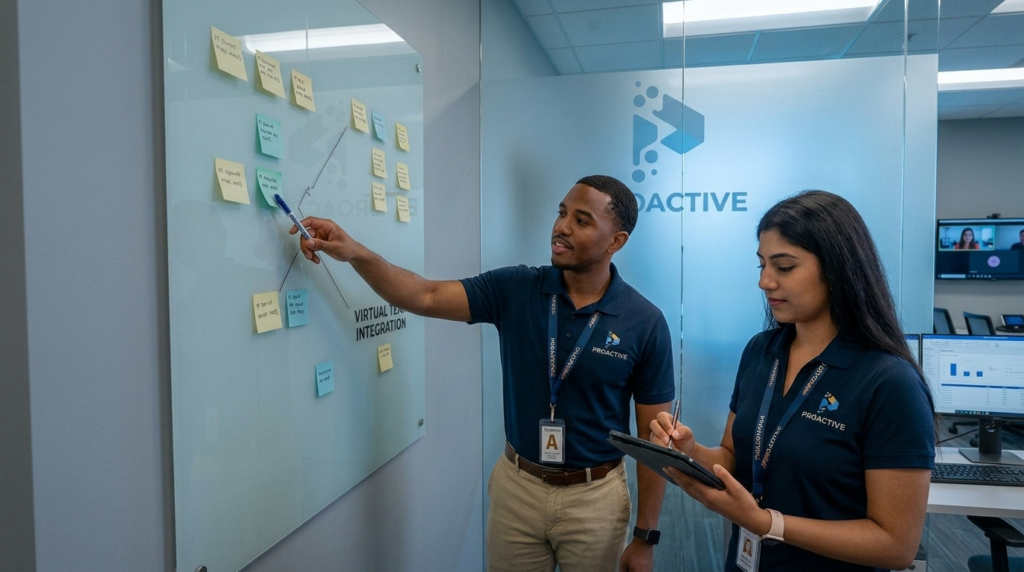
Our team can help with:
- Application status checks
- Payer follow-up
- Medicare Administrative Contractor follow-up
- Missing-document inquiries
- Additional-information requests
- Application corrections
- Resubmission coordination
- Payer correspondence
- Escalation through available payer channels
Laboratory Credentialing Process
Our process is designed around the actual structure of a laboratory.
1. Understand
We review the laboratory's organization, services, locations, regulatory status, and payer objectives.
2. Collect
We gather the applicable organizational and credentialing documentation.
3. Verify
We compare key information across the laboratory's records.
4. Prepare
We prepare the applicable payer or enrollment applications.
5. Submit
We submit through the appropriate payer, PECOS, state, or other applicable process.
6. Track
We monitor application status and outstanding requirements.
7. Follow Up
We communicate with the payer or enrollment entity regarding pending items.
8. Maintain
We help track changes, recredentialing, revalidation, and ongoing enrollment requirements.
How Long Does Laboratory Credentialing Take?
There is no single timeline that applies to every laboratory.
We do not believe in promising an artificial approval date. Instead, we focus on making the process organized, traceable, and actively followed.
A realistic process is better than an unrealistic promise.

Processing time can depend on:
- Payer
- State
- Laboratory type
- Testing services
- CLIA status
- Application completeness
- Required screening
- Documentation
- Ownership structure
- Location
- Payer workload
- Additional information requests
Common Problems
Common Laboratory Credentialing Problems
CLIA Information Does Not Match
The laboratory's CLIA record and payer enrollment information may contain inconsistent details.
NPI Information Is Inconsistent
Different records may contain different organizational names, addresses, or taxonomy information.
Missing Documentation
An application may be delayed because supporting documentation was not included or needs updating.
Ownership Has Changed
A change in ownership can require updates to applicable enrollment records.
Laboratory Director Has Changed
A director change can create additional regulatory and payer-related updates.
New Location Was Added
A new location can require additional licensing, CLIA, or payer enrollment activity depending on the circumstances.
Multiple Payers Are Being Managed Separately
Without a centralized credentialing process, it becomes difficult to know which payer is at which stage.
Revalidation Was Overlooked
An enrollment record can become a problem when required updates are not completed on time.
Laboratory Credentialing vs. CLIA Certification
These should not be treated as interchangeable.
CLIA certification concerns federal requirements for applicable laboratory testing.
Credentialing and payer enrollment concern participation with a payer or healthcare network. A laboratory can therefore have a CLIA certificate and still need separate enrollment or credentialing with Medicare, Medicaid, or commercial health plans. CMS explicitly maintains separate CLIA and Medicare provider enrollment resources.
One does not automatically replace the other.
Laboratory Credentialing Documentation Checklist
The exact documentation varies by laboratory, state, payer, and program.
A credentialing file may include:
Organization
- Legal business name
- DBA, where applicable
- Business structure
- Tax identification information
- Ownership information
Laboratory
- CLIA certificate
- CLIA number
- Certificate type
- Laboratory location
- Laboratory director information
- Applicable accreditation information
Licensing
- State laboratory license where required
- Applicable regulatory documentation
- Other required certifications
Ownership
- Ownership information
- Managing/control information
- Authorized official information
- Required disclosures
Locations
- Physical laboratory address
- Mailing address
- Service locations
- Contact information
Providers & Personnel
Where applicable:
• Laboratory director credentials
• Professional licenses
• Education
• Training
• Experience
• CAQH information
• Supporting documentation
Payers
• Medicare enrollment information
• Medicaid enrollment information
• Commercial payer applications
• Payer IDs
• Participation records
• Contracts
• Previous correspondence
• Enrollment confirmations
Why Laboratories Choose Proactive Medical
We Understand That a Laboratory Is More Than a Provider Name Credentialing needs to reflect the laboratory organization, its regulatory information, locations, services, and payer relationships.
We organize the process around the laboratory as a complete entity.
We Connect the Pieces
Our approach brings together:
Laboratory → CLIA → NPI → Location → Payer → Application → Follow-Up → Approval → Maintenance
This creates a more organized credentialing workflow.
We Focus on Accuracy Before Submission
We review available information before submission to identify obvious inconsistencies, missing documentation, and outdated information.
We Stay Involved After Submission
A submitted application is not the final milestone.
We help track:
• Status
• Requests
• Corrections
• Follow-ups
• Approvals
• Updates
We Think Beyond Initial Enrollment
Laboratories change.
Payers change.
Locations change.
Ownership changes.
Credentialing must keep pace.
Who We Serve
As a provider of laboratory credentialing and enrollment services, as well as billing and credentialing services. The credentialing workflow is tailored around the laboratory’s services, regulatory status, payer relationships, locations, and organizational structure.
Our laboratory credentialing services can support:
Independent Clinical Laboratories
Independent Diagnostic Laboratories
Clinical Laboratories
Diagnostic Laboratories
Physician-Owned Laboratories
Molecular Diagnostic Laboratories
Specialty Laboratories
Toxicology Laboratories
Pathology-Related Laboratories
Hospital Outreach Laboratories
Multi-Location Laboratories
Growing Laboratory Organizations
New Laboratory Organizations
Nationwide Laboratory Credentialing Support
Laboratory credentialing can involve multiple layers of enrollment.
A laboratory may need to manage:
State Requirements + CLIA + Medicare + Medicaid + Managed Care + Commercial Payers
Those requirements do not necessarily operate through one system. Proactive Medical provides nationwide credentialing support designed to help laboratories organize these relationships and maintain a centralized view of their enrollment status. One laboratory. Multiple payers. One organized credentialing strategy.
Frequently Asked Questions
Find answers to the most common questions healthcare providers ask about our medical billing, coding and revenue cycle management services.
Laboratory credentialing is the process of preparing and maintaining an organization’s information for participation with applicable payers, health plans, and government programs.
It can involve organizational information, NPI, CLIA, licenses, locations, ownership, supporting documentation, and payer-specific requirements.
Yes. We can support applicable Medicare enrollment workflows for laboratories, including PECOS/CMS-855B preparation, documentation, tracking, and follow-up.
CMS identifies independent clinical laboratories as suppliers using the CMS-855B enrollment pathway.
We can help organize CLIA-related documentation and coordinate information as part of the broader credentialing process.
However, CLIA certification is a regulatory process and remains subject to CMS and applicable state requirements.
Yes. We support applicable Medicaid enrollment and payer participation processes.
Specific requirements depend on the state and program.
Yes. We can assist with applicable commercial payer enrollment and credentialing.
Yes. We can organize credentialing and payer enrollment across multiple locations.
Yes. Where applicable, we can help coordinate the documentation and payer/enrollment updates associated with laboratory director changes.
Yes. We can help track and coordinate applicable recredentialing and enrollment maintenance requirements.
Yes. We can help with status checks, payer communication, additional-document requests, corrections, and follow-up.
No.
CLIA certification and Medicare enrollment are separate processes. CMS maintains separate CLIA certification and Medicare provider/supplier enrollment requirements.
Talk to Proactive Medical
At Proactive Medical Billing & Coding LLC, we help laboratories manage the credentialing process from initial preparation through payer enrollment, follow-up, approval, and ongoing maintenance.
Laboratory → CLIA → NPI → Payer → Enrollment → Approval → Maintenance
Your laboratory is built to deliver answers. Whether you are launching a new laboratory, expanding testing services, adding a location, entering new payer networks, changing ownership, or dealing with an application that has stalled, our credentialing team, including credentialing specialists, can help organize the next step.
Let’s build a stronger payer network for your laboratory.